

Clamp-on ultrasonic flow meters are widely used for non-intrusive liquid flow measurement in industrial systems.
With no need for pipe cutting, no pipeline damage, and no production shutdown during installation,
they have become the preferred solution for water treatment, wastewater projects, chemical plants, oil and clean liquid measuring scenarios.
To obtain accurate and stable measuring results, correct transducer installation is essential.
The two standard mounting methods are V-Method and Z-Method. Understanding their differences, applicable pipe ranges, and working conditions will help engineers avoid installation errors and unstable flow data.
What Is V-Method Installation (V-Path)
The V-method is the most common installation for small and medium pipelines. Two ultrasonic transducers are mounted on the same side of the pipe.
The ultrasonic signal travels through the liquid and reflects twice inside the pipe wall, forming a V-shaped acoustic path.
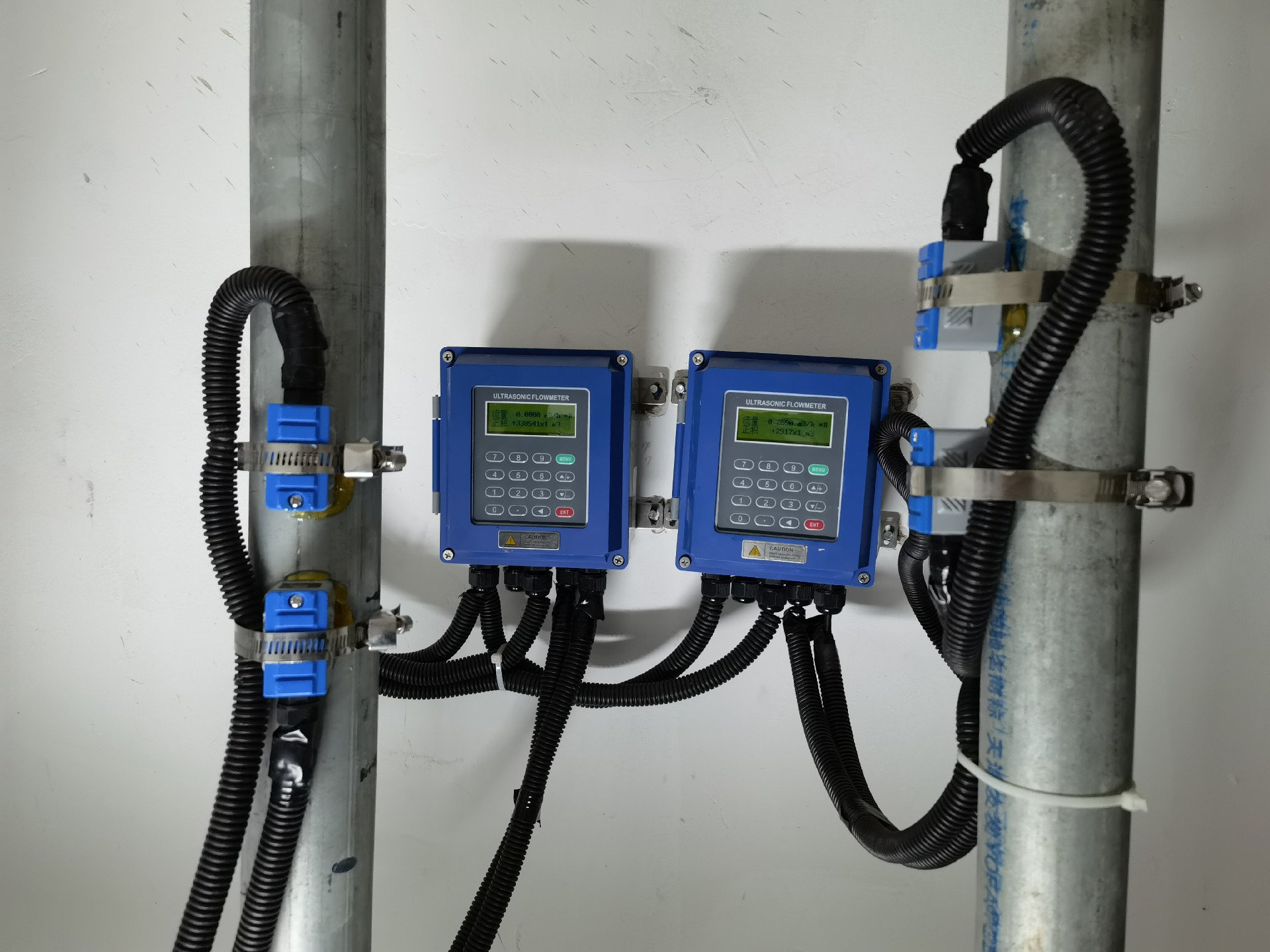
Applicable Pipe Size
DN15 – DN200
Advantages of V-Method
Longer acoustic travel distance inside the liquid for higher measurement resolution and accuracy
Stable signal performance for clean and uniform low-viscosity liquids
Compact installation, suitable for narrow space conditions
High repeatability and precise flow readings
Limitations
Not suitable for large-diameter pipes above DN200
Signal attenuation occurs on thick-wall pipes or liquids with suspended particles and bubbles
Poor signal quality requires switching to Z-method
What Is Z-Method Installation (Z-Path)
The Z-method is designed for large-diameter pipelines. The two clamp-on transducers are installed on opposite sides of the pipe.
The ultrasonic beam directly penetrates the pipe in a straight line, forming a single-cross Z-shaped path.
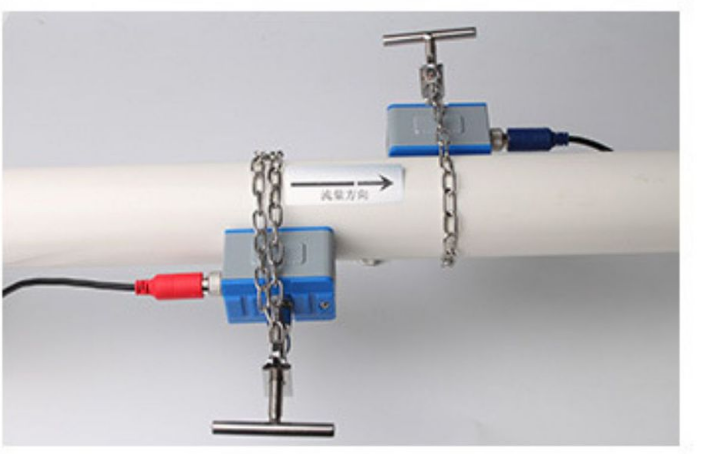
Applicable Pipe Size
DN200 – DN6000
Advantages of Z-Method
Shorter acoustic path reduces signal loss and penetration attenuation
Perfect for large-bore pipes and thick-wall pipelines
Effectively solves weak signal and unstable data issues of V-method
Strong adaptability for complex industrial field conditions
Limitations
Slightly lower resolution compared with V-method
Requires enough space on both sides of the pipeline
V-Method vs Z-Method Comparison Table
Item | V-Method | Z-Method |
|---|---|---|
Transducer Position | Same pipe side | Opposite pipe sides |
Pipe Range | DN15 – DN200 | DN200 – DN6000 |
Acoustic Path | Double reflection, longer path | Direct penetration, shorter path |
Accuracy | Higher | Stable standard accuracy |
Best For | Clean water, purified wastewater, low-viscosity uniform liquids, small-medium pipes | Large pipelines, thick-wall pipes, weak signal working conditions |
Field Installation Selection Rules
Pipes DN15–DN200: Use V-method as the first choice for best accuracy and stability.
Pipes DN200 and above: Adopt Z-method by default to avoid signal attenuation.
Weak or fluctuating signals: Switch from V-method to Z-method regardless of pipe diameter.
Applicable media: Clean water, low-contaminated wastewater, oils, and other uniform low-viscosity liquids. Media with heavy sludge, high bubbles, or large solid particles are not suitable for ultrasonic measurement.
Key Installation Notes
Install transducers within ±45° of the horizontal pipe centerline
Strictly follow the host-calculated installation distance
Ensure the pipeline is fully filled with liquid
Reserve sufficient straight pipe length upstream and downstream
Apply enough coupling grease to avoid signal loss
Conclusion
V-method and Z-method are two standard installation technologies for clamp-on ultrasonic flow meters. V-method provides higher precision for small and medium pipelines, while Z-method ensures stable measurement for large-diameter pipes and complex working conditions. Choosing the correct installation method is the key to obtaining reliable and repeatable flow measurement data.
If you need professional technical support for ultrasonic flow meter selection, installation or calibration, feel free to contact our expert team.